
Virtual Twilight for Real Estate Photos: Day to Dusk Without a Reshoot
A strong exterior is often shot at noon because that is when access, weather, and the photographer align. Buyers, though, respond to dusk: deep sky, warm glass, architecture still legible. That gap is why virtual twilight, also called day to dusk, became a standard line item in real estate marketing.
This guide covers when blue hour helps, when true night is the better mode, how to keep the original structure honest, disclosure basics, and how to run a conversion with our complimentary virtual twilight and day to night converter.
Why dusk sells when noon does not
Daylight exteriors are honest and useful. They show roof condition, hardscape, and landscaping without drama. They also look like every other listing shot between 10 a.m. and 2 p.m. Dusk does different work. Interior lamps read as warmth. The sky gives the silhouette a clean edge. Glass stops looking like a black void. For waterfront, hillside, and contemporary homes with large openings, that hour often becomes the hero image on the portal and in ads.
The problem is operational. Blue hour is short. Weather fails. Access windows miss the light. A second trip costs money and delays the listing. Virtual twilight exists to recover that hero from a clean daytime frame when a true dusk shoot is not practical.
Blue hour versus true night
Blue hour keeps ambient sky light so the architecture stays readable and the neighborhood context remains soft rather than black. It suits most residential listings and any home where you still want trees, roof texture, and adjacent massing to register.
True night pushes deeper contrast and stronger interior glow. Use it when the brief is drama: skyline backdrops, commercial facades, or glass boxes that only feel finished after full dark. Night is less forgiving of weak interior lighting in the source photo. If the daytime frame shows dark rooms, turn lamps on before you shoot, or expect the conversion to invent glow.
What must stay honest
The building, lot lines, openings, and hardscape should match the source. Sky and light may change. Lawn health may be gently evened for presentation in related tools, but inventing a wing, hiding damage, or moving a property line is misrepresentation. Keep the original daytime file. Publish the edit only after a side-by-side check of rooflines, mullions, and tree edges.
MLS and advertising rules vary by board. Many accept weather and lighting presentation edits; some require disclosure. Follow your board. When in doubt, label the image and keep the unedited frame available to serious buyers.
How to shoot a source frame that converts well
Level the camera. Prefer a mild wide lens over an extreme one. Expose for the facade, not only the sky. Turn on interior lights if you want window glow later. Avoid heavy HDR halos and clipped white skies. A single, sharp RAW or high-quality JPEG beats a stack of over-processed portal exports.
Shoot a few angles: straight elevation, three-quarter, and the approach view buyers will remember from the street. Conversions cannot fix a weak composition. They can only relight a good one.
Running a conversion
Our virtual twilight converter is built for structure-preserving day-to-dusk and day-to-night work. Upload a clean daytime exterior, choose blue hour or night, and review the result before download. Complimentary access applies for existing Nakada Design clients within daily limits; volume plans are available for teams that run this on every listing.
After the pass, check three things: geometry against the source, window glow that looks occupied rather than radioactive, and sky transitions at the roofline. Discard any frame that drifts. One honest dusk image beats three that look synthetic.
Where virtual twilight fits in a marketing system
Use dusk heroes on the listing portal, paid social, and the property website header. Keep a true daytime set for condition and context. Pair the visuals with a clear inquiry path and accurate copy. Photography opens the door; the rest of the listing has to hold the buyer once they step through.
For related presentation tools, see sky replacement, virtual staging, and photo declutter. For brokerage positioning beyond a single listing, see our real estate practice page.
If you want listing photography and web presence held to the same standard, tell us about the property or the brokerage.
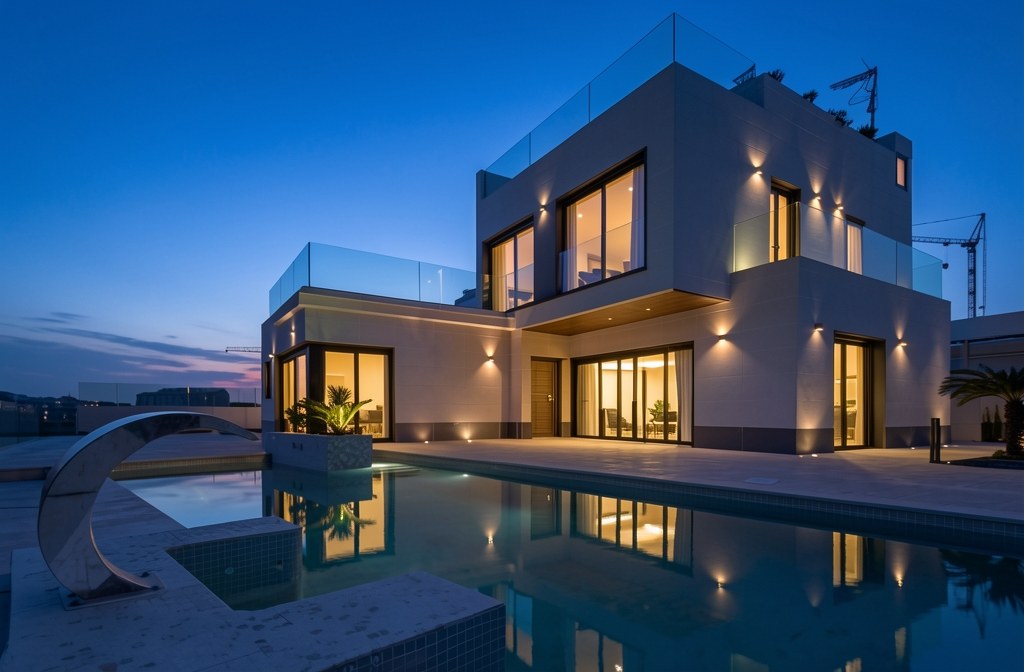
Daytime source used in our structure-lock test.
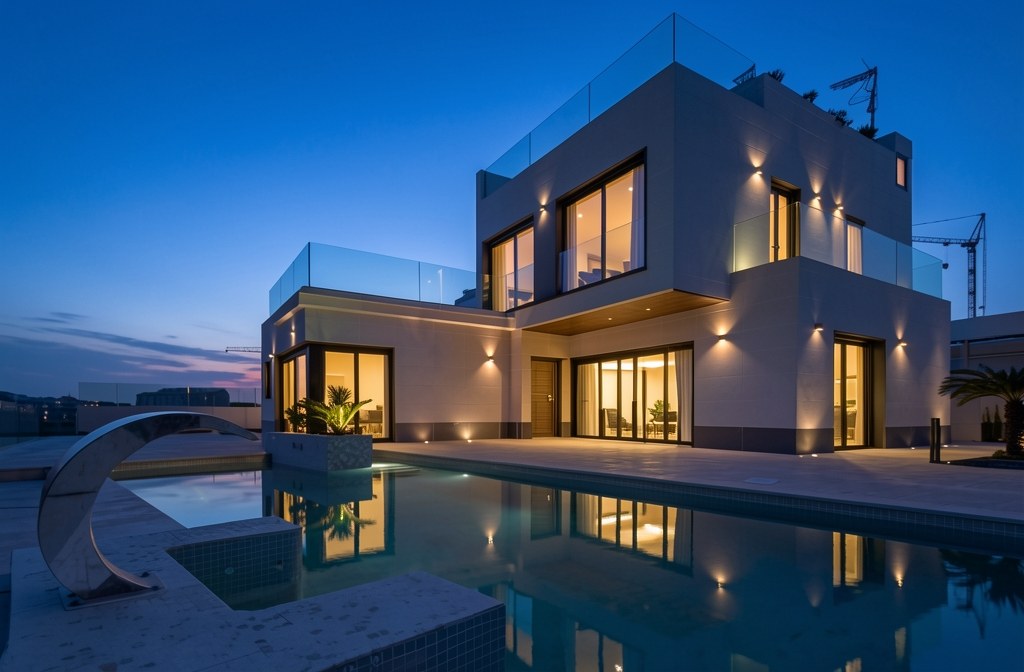
Same scene after blue-hour twilight conversion (structure-preserving prompt).
What virtual twilight is (and is not)
Virtual twilight is a lighting change applied to an existing daytime exterior so it reads as blue hour. Done well, the building, hardscape and camera stay put. Only sky, ambient light and interior glow shift.
It is not a license to invent architecture. Adding windows, moving doors or redesigning a facade turns a listing aid into a misleading image. Our converter is prompted for identity-preserving relight: same openings, same massing, same crop.
Twilight vs night: which mode to choose
Twilight (blue hour) keeps residual color in the sky and a balanced relationship between exterior mass and interior light. It is the default for most residential listings and architecture portfolios because the building remains easy to read.
Night pushes later: darker sky, stronger window glow, more drama. Use it when the property sells on evening presence, or when the daytime sky is already flat and you want contrast. Avoid a fake moon unless the source already has one.
In the free tool, pick the mode before you convert. The same structure-lock rules apply to both.
When day to dusk earns its place in marketing
- Listing galleries where every competing home shows only harsh noon light
- Architect project pages that need a consistent dusk set without a second shoot day
- Broker marketing when the only usable exterior was captured between showings
- Social and ad creatives that need a calmer, premium register than mid-day sun
Pair virtual work with real blue-hour frames when you can schedule them. Use the golden hour calculator to plan true dusk, and use virtual twilight when the calendar will not cooperate.
How to prepare a source photo
- Shoot or select a sharp, level exterior with readable windows and clear sky
- Crop to the listing you intend to market before conversion
- Avoid already-dusk frames and extreme HDR that crush midtones
- Prefer one clean hero angle over a collage of warped verticals
The model can only preserve structure that is already legible. Muddy glass and heavy perspective warp make identity lock harder.
How the free converter works
Open the virtual twilight converter. Upload a JPEG, PNG or WebP. Choose twilight or night. Convert. The browser resizes to a maximum of 1024 pixels on the long side, then sends the image to a Cloudflare Worker that runs FLUX.2 [klein] with a structure-lock prompt. Results appear on the page. Download asks for an email once per browser so we can keep the complimentary tier available.
Powered by Cloudflare Workers AI. No paid third-party image API is required on your side.
Quality checks before you publish a listing
- Count windows and doors against the daytime original
- Confirm roof lines, railings and hardscape edges still match
- Check that glow sits only in glass that existed in the source
- Reject any frame that invents furniture, people or signage
If a result drifts, try a cleaner crop or the other lighting mode. Generative editors improve with clear inputs; they are not a substitute for judgment.
Where this sits in a broader practice
Virtual twilight is one surface of presentation. It works best beside disciplined photography, honest listing copy and a site that loads quickly on mobile. For agents and brokers, that is the same standard we apply across real estate marketing. For architects, dusk frames should still match the rigor of the drawings. Photographers can use the tool as a client preview while protecting a true dusk package as the premium deliverable.
Try it
Run a daytime exterior through the free converter and compare twilight against night on the same file:
Free virtual twilight and day to night photo converter
Frequently asked questions
A day-to-dusk lighting conversion of a daytime exterior that keeps the same building and camera while shifting sky and interior glow to blue hour.
Twilight (blue hour) for most listings; night for darker sky and stronger interior light when evening drama is the goal.
Yes. Nakada Design offers a free virtual twilight and day to night converter powered by Cloudflare Workers AI FLUX.2 [klein].