
Art Gallery About Pages: 10 That Attract Collectors (and Cómo to Write Yours)
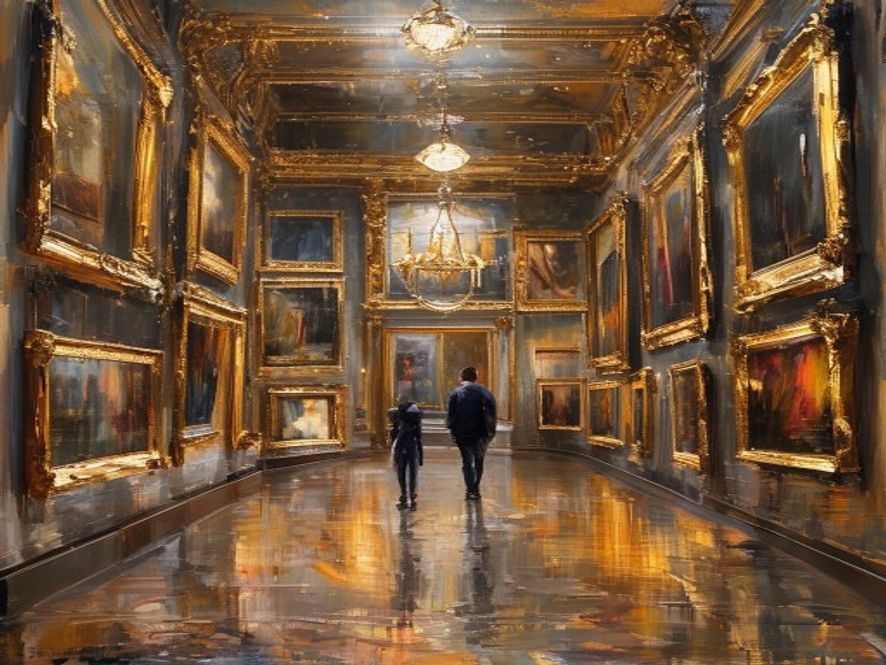
A gallery's About page is where collectors, artists, journalists, and fair committees check whether the program has a spine. Pretty exhibition pages cannot save a vague origin story. The ten examples below show galleries whose public identities are legible, specific, and useful. Afterward: a structure you can apply whether you run a single room or a multi-city network.
Related reading: 25 best art gallery websites, art gallery website design, and how to get more collectors.
Ten gallery About pages and program stories
1. David Zwirner - depth as trust
Zwirner's institutional pages and program writing give collectors a reason to believe the roster is edited, not assembled. About content for a gallery should make the program's logic obvious in two minutes.
2. Hauser & Wirth - world-building
Hauser & Wirth explains a network that includes galleries, publishing, and destinations. Complex gallery groups need About architecture that maps the world without a maze.
3. Pace - history with a forward gear
Pace's public story holds a long timeline and a contemporary digital posture at once. Older galleries modernizing their site can keep founding dates without sounding archival.
4. White Cube - program clarity
White Cube's materials keep the emphasis on artists and exhibitions. The gallery's identity is a frame, not a rival brand to the work. Most dealer sites should be less self-celebratory than they are.
5. Marian Goodman - seriousness of tone
Goodman's public presence matches a program known for rigor. The lesson is tonal fit: if your artists are quiet and exacting, your About page cannot read like a startup landing page.
6. Regen Projects - LA confidence
Regen Projects represents a Los Angeles program with clarity and contemporary edge. Regional galleries competing with coastal mega-galleries need this level of self-possession in prose.
7. kurimanzutto - place as program
kurimanzutto's story is inseparable from Mexico City and a wider Latin American conversation. Galleries rooted in a city should say so with pride and precision, not as a limitation apology.
8. Lisson Gallery - multi-city coherence
Lisson holds a multi-city identity without fragmenting. If you operate more than one space, the About page must explain how the program stays one program.
9. Esther Schipper - conceptual clarity
Schipper's public materials suit a conceptually driven roster. When your program is idea-led, the gallery bio should sound intellectually awake without becoming unreadable.
10. Goodman Gallery - global south perspective
Goodman Gallery's story carries African and diasporic contemporary programs across cities. Point of view is the brand. Generic "international contemporary art" copy helps no one.
Qué hacemos works in a gallery bio
- Program thesis. Qué hacemos you show and why, in language a first-time visitor understands.
- Places. Cities, neighborhoods, and fair identities that matter.
- People. Founders and directors with real biographies, not only logos.
- Artists as proof. A short signal of the roster's character without pasting the full list.
- Cómo to engage. Viewing rooms, visits by appointment, advisory paths.
A simple page structure
Open with the program thesis. Follow with history only as far as it explains the present. Introduce leadership. State locations and visiting norms. Close with a contact path for artists, collectors, and press as separate lines if their needs differ.
Words to cut
"Cutting-edge," "thought-provoking," and "dynamic program" arrive already tired. Replace them with mediums, generations, geographies, and a sentence about how you work with estates or living artists. Specificity is the only luxury adjective that still works.
For artist-first visitors
Many artists read your About page before submitting or accepting a studio visit. Say how you actually work with artists: exhibition cadence, catalog support, fair strategy. Silence here reads as avoidance. More on artist-facing sites in artist website design.
Collector-facing versus artist-facing language
Collectors want program logic, discretion norms, and how to view work. Artists want exhibition cadence, fair strategy, and how decisions get made. You can serve both on one About page with two short subsections. Ignoring artists on the About page while running an open submission form is a contradiction.
Founding stories that earn their length
A founding story helps when it explains the program thesis. It fails when it becomes a chronology of every lease and fair booth. Keep dates that changed the gallery's identity. Cut dates that only flatter the founders.
Multi-space and multi-city galleries
Publish hours, appointment rules, and addresses with map accuracy. Explain whether inventory moves between spaces and how online viewing rooms relate to the physical program. Confusion here creates no-shows and irritated advisors.
Prensa and advisory paths
Give journalists a press contact and a place to find high-resolution images legally. Give advisors a discreet inquiry path that does not look like a newsletter signup. These small structural choices signal professionalism as loudly as a fair booth wall.
Sample About outline for a single-space gallery
- Program thesis (3-5 sentences).
- Qué hacemos collectors can expect when visiting.
- Leadership bios (80-120 words each).
- Selected artist signal (names or generations, not the full roster dump).
- Fair participation posture.
- Contact paths split by intent.
For the wider digital program, see digital marketing for art galleries and online viewing rooms.
Fair strategy language on the About page
State the kinds of fairs you do and why. Collectors use fair calendars to understand ambition and peer set. You do not need a complete history of booth numbers; you need a posture: primary fair commitments, regional fairs you use for discovery, and whether you run curated presentations or inventory-led booths.
If you have stepped back from a fair, do not leave stale claims online. Out-of-date fair lists are a quiet credibility leak among advisors who actually attend.
Online viewing rooms and the About page
Your About page should explain how digital presentations relate to the physical program. Are viewing rooms permanent? Exhibition-tied? Private by link only? Collectors taught by mega-galleries arrive with expectations. Define yours so you control them.
Trabajosed example (composite gallery)
"Northlight Gallery presents contemporary painting and sculpture with a focus on artists who treat material as seriously as image. Based in Los Angeles, the gallery mounts six to eight exhibitions a year and participates selectively in fairs where those artists meet their collectors. Visits are by appointment as well as during exhibition hours. Collectors and advisors may request private viewings of available work; artists should send a concise PDF with biography, five images, and exhibition history."
That block states medium, cadence, city, fair posture, visit rules, and two intake paths. Adjust every noun until it is true for you.
Common About page failures in galleries
- Program language that could describe any gallery in any city.
- Founder biography that never states what the gallery shows now.
- No visit instructions.
- Broken press email.
- Roster page orphaned from the About thesis.
Cómo Nakada Design helps
Nakada Design is a luxury marketing agency in Los Angeles. We build websites, SEO programs, and AI-aware acquisition systems for art galleries, dealers, and artist-led spaces.
To put this into practice for your firm, start with our art galleries practice, SEO for art galleries, and 25 best art gallery websites, or consultar with a short note about the work.
Preguntas frecuentes
A program thesis, locations, leadership bios, a signal of the roster's character, and clear paths for collectors, artists, and press.
Use specific mediums, generations, and geographies. Cut empty adjectives. Seriousness comes from precision.
Keep one program story and clear subpages or sections per space. Visitors should understand how the program stays coherent across cities.
Collectors, their advisors, artists, and journalists do. Exhibition pages show the work; About pages show whether the gallery has a spine.
It concentrates durable facts: who you are, where you operate, and what you represent. Those facts get cited when they are clear and consistent elsewhere on the web.